You just walked through the door. Here's the part nobody handed you yet.
You're not alone in this.
Not a teaser. Not a pitch in disguise. This is the real guide. Six shifts that rewire how recovery actually works, written from nine years on the other side and the 20,000+ humans who've walked the same road before you. Take your time. It's yours now.
This is the cheat sheet. The full system... the 6-week program, the 123-page Beyond Sober book, the 587-page Hella Healthy biology book, the community, the calls with me... that's where this guide came from. You don't need any of it to start. Some people walk the whole road with just this. But you should know what you're holding.
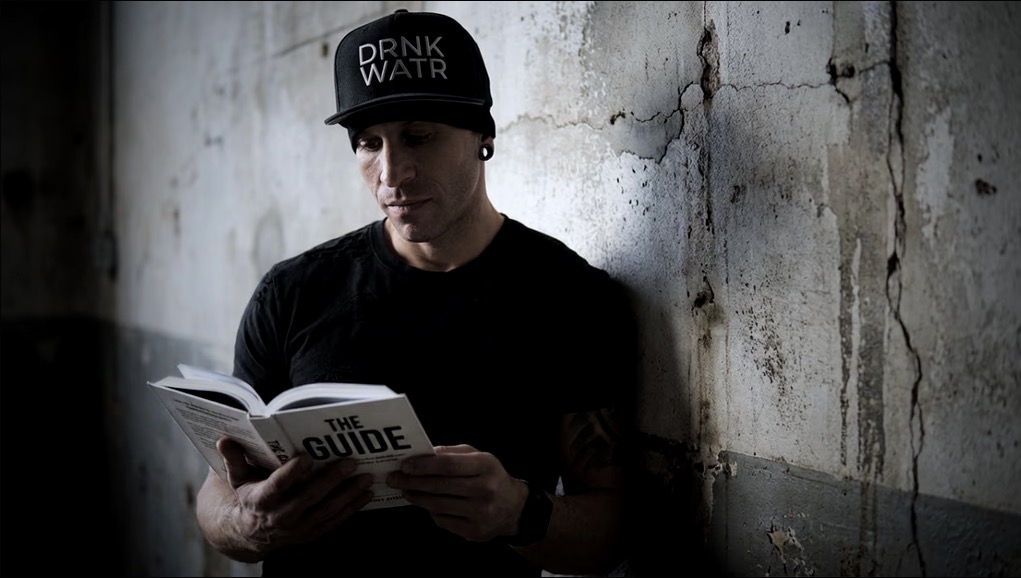
How to actually use this.
You're not behind. You're right on time. One shift, one day. That's all this asks.
You don't need to finish this in one sitting. You're not behind. One shift a day for six days lands harder than one binge.
Each shift has one. They take 5-15 minutes. The ones who do them are the ones it works for. Keep a notebook nearby. Or use your phone. Doesn't matter… just do them.
Not every line is for you. Some are for the version of you in three months. That's fine. Take what serves you. Leave the rest.
Print it, mark it up, stick it in a drawer. The PDF is the same content in a format you can carry, hand off, or scribble on. Whatever helps it stick.
Take it with you.
Same content, printable. Handy for the people who like to write in margins or read offline.
I'm not a doctor. I lived this.
Before you spend an hour with my voice in your head, you should know whose voice it is. This isn't theory I borrowed from a textbook. It's the road I walked, and the road I've walked alongside twenty thousand other humans since.
I built this guide from the same six shifts that run every program I've ever made and every one-on-one call I've ever taken. I run a 15,000-member private community, post 8,000+ videos, take 600 calls a year, and I do all of it from the other side of the thing I almost died from. That's the only credential I care about.
Stop negotiating with the truth.
Here's the part nobody warns you about: most of the exhaustion of addiction isn't the drinking. It's the daily argument with the truth of where you actually are. The "I don't really drink that much." The "I'll cut back next week." The mental gymnastics that take more energy than the drinking itself.
Acceptance is not surrender. Read that twice. Acceptance is what happens when you stop spending all of your strength denying the obvious, and start spending it on the actual work. Denial is the heaviest thing you've ever carried. The second you put it down, you'll wonder how you ever stood up under it.
The shift here is small but it's the whole foundation. Look at your relationship with alcohol exactly as it is. Not as it was at your worst. Not as you hope it'll be in six months. Right now. Today. The frequency. The role it plays. The thing it's covering for. Without judgment. Without spiraling. Without making it bigger or smaller than it is.
Most people skip this because it's uncomfortable. That's exactly why it's the first shift. Nothing else works without this one underneath it.
The Truth Inventory.
Write your honest answers. Not the version you'd say in front of someone. The version you say in your head at 2am. No one's reading this but you.
- How often do I actually drink? Be specific. Days per week. Drinks per session.
- What does alcohol do for me that nothing else seems to? Name the role it plays.
- What would change in my life if I never drank again? Both the losses and the gains.
- What's the one sentence I've been refusing to say out loud about my drinking?
Everything is pattern.
Your life right now is the result of every default you've never questioned. The way you wake up. The way you handle stress. The way you celebrate. The way you grieve. None of it was a decision. It was a pattern. Patterns that were probably built when you were way too young to know what you were building.
Here's the wild part: that means none of it is fixed. Patterns can be unwoven. Defaults can be rewritten. The thing that feels like "just who I am" is actually just "what I've practiced the most." And practice can change.
Alcohol is rarely the original problem. It's a pattern that solved another problem… stress, social anxiety, boredom, grief, identity, belonging. If you only remove the alcohol without addressing the pattern underneath, the pattern just goes shopping for a new costume. Food, work, scrolling, relationships. Whatever's nearby.
The shift in this one is realizing your relationship with alcohol is not a character flaw. It's a learned response that fired enough times to become automatic. The same brain that built the pattern can build a new one. That's not optimism. That's neuroscience.
The Pattern Map.
We're going to find the actual pattern, not the surface behavior. The drinking is the symptom. We want the cause.
- When do I most reliably reach for a drink? Time of day, location, emotion, situation.
- What was happening in the 30 minutes before I picked it up?
- What feeling was I trying to change? (Stress, loneliness, boredom, social pressure, anxiety, sadness, celebration, exhaustion)
- What else has worked, even briefly, for that same feeling? (Walks, music, calling someone, food, sleep, water)
Feed the body first.
This is the one I wish someone had told me first. You don't have a willpower problem. You have a blood sugar problem. A dopamine problem. A magnesium problem. A hydration problem. Alcohol was doing a really good job covering for all of it. When you stop drinking and the cravings, mood crashes, anxiety, and exhaustion don't go away… that's why. The bandage is gone, but the wound underneath was already there.
Most "cravings" aren't cravings. They're your body asking to be fed. Stable blood sugar makes "just one" actually possible. Crashing blood sugar at 4pm makes "just one" a fantasy. The same is true for serotonin (gut), dopamine (protein), cortisol (sleep + sunlight), and a dozen other systems that need real inputs to do their job.
The shift here is moving from a willpower model to a fuel model. You're not weak. You're under-resourced. Once the body has what it needs, the head quiets down on its own. It's not magic. It's just biology that nobody walked you through because nobody walked them through it either.
Start with water. Yes, really. Every time you'd reach for a drink, reach for water first. Not as a replacement for the alcohol. As a handshake with your body. A signal that you're paying attention now. That gesture, repeated for a week, changes more than you'd expect.
The Seven-Day Body Reset.
Don't change your diet. Don't start a workout plan. Just add four things for seven days and watch what happens. No subtractions. Only additions.
- Water before coffee. Every morning. 16 ounces before anything else.
- Protein with every meal. Aim for one palm-sized portion. Eggs, meat, fish, beans, protein shake. Whatever lands.
- Sunlight on your face within 30 minutes of waking. Even cloudy days. Even five minutes. Outside, not through a window.
- Water every time you'd reach for a drink. Every time. As the first move, not the only one.
The story is the cage.
Here's a hard one. The story you've been telling yourself about why you drink? It's not helping you. Not because it's wrong. Most of it is probably true. But true and useful are different jobs. The story explains the past. It does not change the present. And every minute you spend re-litigating what happened to you is a minute you're not building what's next.
You've replayed it. You've written it down in journals. You've cried about it in therapy. You've explained it to partners. And it's still there. Because the past doesn't dissolve through repetition. It dissolves through redirection… by putting the energy somewhere it can actually move something.
This isn't bypassing. This isn't pretending it didn't happen. This is the very specific shift from "my past explains me" to "my past is data I can use." Same facts. Different relationship to them. One keeps you stuck. The other one frees you to act.
The trickiest part of this shift is that it feels disrespectful at first. Like you're betraying the version of you who survived all that. You're not. You're honoring them by finally letting them rest. They did their job. They got you here. Now it's your job to take the wheel.
The Story I'm Done Telling.
This one's heavier. Take your time. It's not about forgetting. It's about retiring a story that's run out of road.
- What's the story I tell about why I drink? Write it out. The full version.
- How long have I been telling it? Roughly.
- What has telling it actually accomplished? Be honest.
- If I could not tell that story for the next 30 days, what would I tell instead?
- What's one piece of data from the past I want to use, instead of a story I want to relive?
Build toward, not away from.
If "not drinking" is the entire identity you're building, you've built a life around an absence. That's not freedom. That's a quieter version of the same prison. You'll white-knuckle it for a while, hit a stretch where nothing's exciting, and then start questioning why you bothered. Most relapses happen here.
The shift is from running from something to running toward something. Not because the thing you ran from doesn't matter. It does. It mattered enough to start this. But it's not strong enough fuel to last 9 years. Pulling toward a future you actually want is. That's the only renewable energy in this whole game.
Most people in early recovery can tell you exactly what they don't want anymore. Almost no one can tell you what they do want. Because for years, "what I want" was just "the next drink." So when alcohol leaves the room, the wanting muscle is atrophied. We have to rebuild it from scratch. Slowly. Carefully. With curiosity.
This is the shift where joy becomes a strategy. Not a reward. Not a consolation prize. An actual functional input. What lights you up now becomes the thing pulling you forward. The hobby you abandoned. The body you haven't lived in. The relationship you've been half-present for. The work you keep almost doing. That's the destination.
The Pull List.
We're rebuilding the wanting muscle. This is not a vision board. This is a list of things that are actually true.
- What did I love doing before alcohol became a daily presence? List 3 things.
- What's something I've watched other people do that made me think "I'd love to do that"?
- If I had a perfectly ordinary Saturday with no obligations and no alcohol, how would I spend it?
- Who would I be more present for if I had this work locked in?
- What's one thing on this list I could touch this week? Not master. Just touch.
You're not recovering. You're arriving.
The word "recovery" is one of the most quietly limiting words in this whole space. It implies you're trying to get back to a previous state. You're not. You're building something that didn't exist before. The version of you on the other side of this work was never in your past. They're in your future. You're not going home. You're going somewhere new.
This is the shift that pulls everything together. Identity. Not behavior. Not abstinence. Not recovery. Identity. The deepest answer to the question of who you are. And here's the thing about identity: it's not fixed. It's a daily vote. Every choice, every input, every shift you've practiced through this guide is a vote for who you're becoming.
Nine years ago I was 142 pounds, fresh out of a hospital bed, with a liver they didn't expect to recover. I'm 160 pounds of the strongest body I've ever had, in the same liver, healed. That's not willpower. That's six shifts, repeated daily, until they were no longer choices. Until they were just who I am.
The point of all of this isn't to get you sober. It's to get you home to yourself. Sobriety is a side effect of that homecoming. So is the body that finally feels like yours. The relationships that finally land. The mornings that don't feel like punishment. They all come from the same place: the version of you that knew, all along, that they were meant for more.
The Person You're Becoming.
Pull out the Truth Inventory from Shift 01. Read it. That was the starting line. Now we're going to draft the finish line. Or… the next checkpoint.
- Six months from now, if I've quietly walked these six shifts daily, who am I? Describe them. Body, mind, schedule, relationships, energy.
- What do they do first thing in the morning?
- What do they no longer tolerate that I currently do?
- What's one thing I can do today that's a vote for them?
- What's one promise I'm willing to make to them, right now, that I'll keep through this week?
This is what nine years actually looks like.
Not a marketing photo. Not a motivational quote. The same body, eight years apart. One of these days I was told I had seven left. The other was last Tuesday.
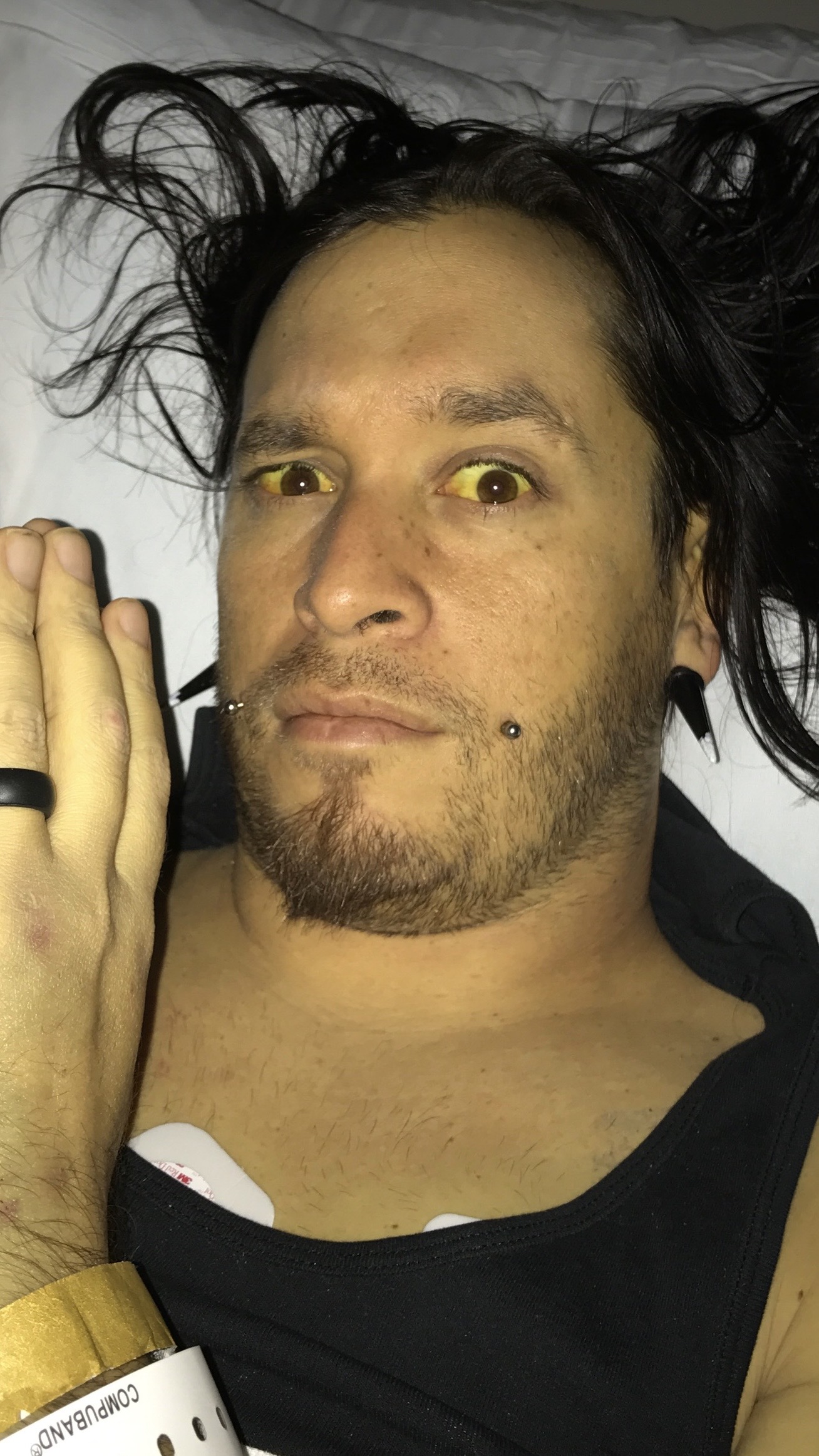
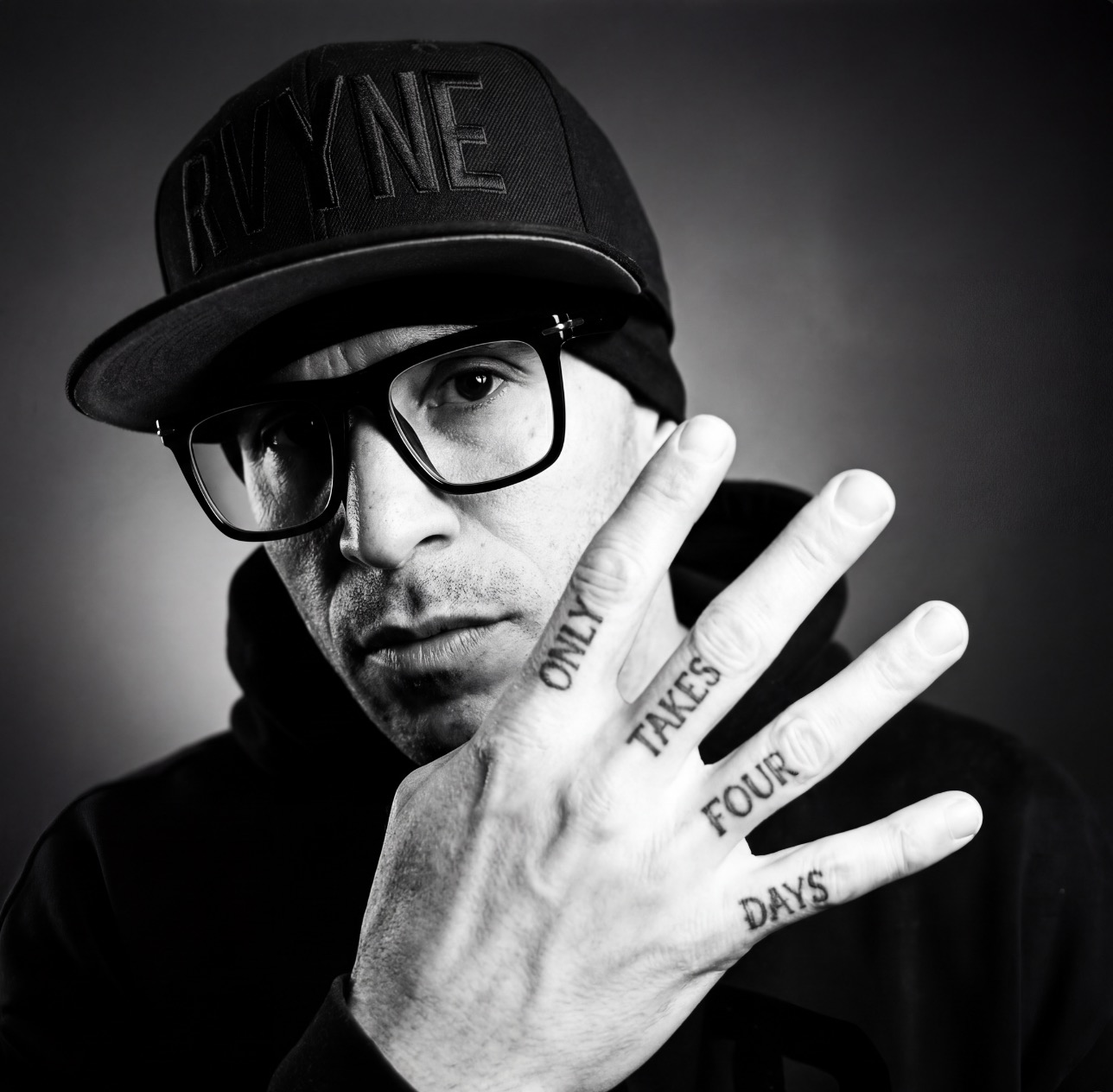
The body forgives faster than the industry wants you to believe. The hard part was never the liver. The hard part was the part nobody handed me a guide for. That's the guide you just read. — Kohdi · Founder, Beyond Sober
You have everything you need.
That's not a throwaway line. You actually do. The six shifts in this guide are the foundation of every program I've ever built, every coaching call I've ever taken, and every chapter of every book I've written. They're not a sample. They're the real thing.
Some people read this once and walk the rest of the road on their own. If that's you, godspeed. Truly. I want you free, however that gets done.
Some people read this and realize they want someone in the room while they walk it. Not because the work is too hard. Because doing it alone after everything you've already done alone… is exhausting. That's what the rest of what I've built is for. A program. A community. Books that go deeper. People who've walked it. Me, when you want me. It's all here when you're ready, and not a second before.
Either way, you came here for a reason. The reason was real. Don't let it go quiet.
When you're ready, the door is here.
The full Beyond Sober program. Six weeks. Built around these shifts and the parts of the work the guide can't do alone. Walk through when it's time. Not before.